
留言
Search Products


- 首页
- 新闻资讯
- Ceramic Dispersion Discs for Lithium Battery Slurry Processing: Performance and Benefits
Ceramic Dispersion Discs for Lithium Battery Slurry Processing: Performance and Benefits
Ceramic Dispersion Discs for Lithium Battery Slurry Processing: Performance and Benefits
Ceramic dispersion discs are high-performance agitation components purpose-built for the high-shear mixing and homogenization of lithium battery electrode slurries. Fabricated from advanced engineering ceramics such as yttria-stabilized zirconia and high-purity alumina, these rotating discs generate intense shear fields that break down agglomerates, uniformly disperse conductive additives, and achieve the homogeneous particle distribution essential for consistent electrode coating quality. In the rapidly expanding lithium battery manufacturing industry, where slurry consistency directly determines cell capacity, cycle life, and safety, ceramic dispersion discs have become a critical enabling technology replacing conventional stainless steel and polymer-coated alternatives.

Figure 1: A precision-engineered ceramic dispersion disc with radial tooth profile, designed for high-shear slurry mixing in lithium battery electrode preparation. The white zirconia or alumina ceramic construction provides exceptional wear resistance, chemical inertness, and zero metal ion leaching an essential requirement for maintaining electrochemical purity in cathode (NMC, LFP, LCO) and anode (graphite, silicon-carbon) slurry processing.
What Is a Ceramic Dispersion Disc?
A ceramic dispersion disc is a rotating agitator component consisting of a central shaft bore with a toothed or serrated outer circumference, engineered to impart high shear forces into liquid-solid suspensions during mixing. Unlike conventional impellers that primarily generate bulk flow, dispersion discs are specifically designed to create localized zones of intense turbulence and cavitation where particle agglomerates are mechanically broken apart. The disc rotates at high peripheral speeds typically between 10 and 25 meters per second generating sufficient shear stress to overcome the van der Waals forces and capillary bridges that bind fine particles together.
In the context of lithium battery manufacturing, these discs are installed on the shaft of high-speed dispersers or planetary mixers where they work in concert with slower anchor or butterfly agitators. While the low-speed agitators provide bulk circulation and prevent sedimentation, the ceramic dispersion disc delivers the critical high-shear energy needed to de-agglomerate active materials such as lithium nickel manganese cobalt oxide (NMC), lithium iron phosphate (LFP), and lithium cobalt oxide (LCO) and to uniformly disperse carbon black or carbon nanotube (CNT) conductive additives throughout the slurry matrix. The choice of ceramic as the disc material is far from incidental; it directly addresses the single most persistent challenge in battery slurry processing: metallic contamination.
Conventional stainless steel dispersion discs, despite being widely used, are inherently susceptible to gradual wear when processing abrasive ceramic-based cathode powders. Over time, microscopic iron, chromium, and nickel particles erode from the disc surface and become entrained in the slurry. These metal contaminants are electrochemical poisons: they catalyze undesirable side reactions within the finished cell, promote metal ion dissolution, accelerate capacity fade, and in severe cases, cause internal short circuits through dendritic growth. Ceramic dispersion discs eliminate this contamination pathway entirely, providing an intrinsically clean mixing interface that preserves the electrochemical integrity of every gram of active material processed.
The Critical Role of Dispersion in Lithium Battery Slurry Preparation
To fully appreciate why ceramic dispersion discs deliver transformative benefits, one must first understand the function of dispersion within the battery electrode manufacturing chain. Electrode slurry is not simply a mixture of powders and solvents; it is a complex colloidal system whose microstructure directly governs the quality and performance of the final battery cell.
Three Levels of Dispersion in Battery Slurries
1. De-agglomeration of Active Material
Cathode powders such as NMC and LFP arrive as micron-scale secondary particles composed of nano-scale primary crystallites loosely bound by van der Waals forces. Without adequate shear, these agglomerates persist in the slurry, creating coating defects such as streaks, pinholes, and thickness non-uniformity on the current collector. Dispersion discs must generate sufficient shear to break these agglomerates down to their constituent primary particles without fracturing the crystallites themselves.
2. Conductive Additive Network Formation
Carbon black, acetylene black, and carbon nanotubes must be dispersed to their primary particle or fibril level to form a continuous percolation network throughout the dried electrode. Incomplete dispersion results in dead zones electrically isolated regions of active material that contribute zero capacity. The ceramic dispersion discs high-shear action prevents conductive additive re-agglomeration during the mixing cycle.
3. Binder Distribution and Gelation
PVDF (polyvinylidene fluoride) binder must be molecularly dissolved and uniformly distributed to provide consistent adhesion between active material particles and the current collector. Localized binder-rich or binder-poor regions caused by inadequate dispersion lead to electrode delamination, increased internal resistance, and compromised mechanical integrity during calendering and cell winding.
The Consequence of Poor Dispersion: When any of these three dispersion levels falls short, the downstream effects cascade through the entire cell manufacturing chain. Coating defects reduce production yield; electrode resistance variation creates hot spots during cycling; and inconsistent porosity leads to uneven electrolyte wetting and lithium plating during fast charging. Ceramic dispersion discs, through their precision-engineered tooth geometry and material stability, provide the repeatable shear environment that transforms these variables from uncontrolled risks into tightly managed process parameters.

Figure 2: Technical design view of a ceramic dispersion disc highlighting the precision tooth geometry critical to shear field generation. The evenly spaced peripheral teeth create alternating high-velocity and low-velocity zones as the disc rotates, generating the intense local shear gradients that efficiently de-agglomerate cathode active material powders (NMC, LFP, LCO) and disperse conductive carbon additives within the solvent-binder matrix.
Material Advantages: Why Ceramic Outperforms Metal and Polymer
The selection of disc material is arguably the single most impactful design decision affecting slurry quality, process economics, and cell performance. Three families of materials have been used for dispersion discs in battery slurry mixing: metals (primarily stainless steel 304 and 316L), engineering polymers (PTFE, PEEK, PU-coated), and advanced ceramics (zirconia, alumina, silicon nitride). Each offers a distinct profile of wear resistance, contamination risk, and cost.
1. Zirconia (Y-TZP) Dispersion Discs
Yttria-stabilized tetragonal zirconia polycrystal (Y-TZP) is the premium choice for the most demanding lithium battery slurry applications. With a Vickers hardness exceeding 1,200 HV and fracture toughness of 6-10 MPa·m¹&sol2;, Y-TZP dispersion discs exhibit virtually zero measurable wear even after thousands of hours processing abrasive cathode materials. The transformation toughening mechanism intrinsic to Y-TZP renders it uniquely resistant to the micro-chipping and edge rounding that degrade metal discs. Used extensively in NMC and high-nickel cathode slurry lines where any trace of metal contamination is unacceptable.
2. Alumina (Al&sub2;O&sub3;) Dispersion Discs
High-purity alumina (typically greater than 99.5% Al&sub2;O&sub3;) offers an excellent balance of wear resistance, chemical stability, and cost-effectiveness. With hardness around 1,500-1,650 HV and outstanding resistance to both acidic and alkaline slurry chemistries, alumina discs are well-suited for LFP cathode processing, graphite anode mixing, and general-purpose electrode slurry lines. While slightly less tough than zirconia, alumina's higher hardness provides superior resistance to abrasive wear from hard filler particles and is the preferred choice when processing Si-C composite anode slurries.
3. Silicon Nitride (Si&sub3;N&sub4;) Dispersion Discs
Silicon nitride combines the high hardness of alumina (approximately 1,500 HV) with fracture toughness approaching that of zirconia, creating a uniquely damage-tolerant ceramic. Its low thermal expansion coefficient and exceptional thermal shock resistance make Si&sub3;N&sub4; discs particularly valuable in processes requiring rapid temperature cycling or where localized frictional heating at the disc-slurry interface is a concern. The self-lubricating characteristics of silicon nitride also reduce power consumption during high-speed dispersion.

Figure 3: Alternate viewing angle of a ceramic dispersion disc showing the shaft mounting bore and overall disc profile. The central hub is precision-ground to ensure concentricity and vibration-free operation at disperser speeds of 1,500-5,000 RPM. The absence of metallic components eliminates galvanic corrosion risks when processing water-based anode slurries containing carboxymethyl cellulose (CMC) and styrene-butadiene rubber (SBR) binders.
Key Performance Benefits of Ceramic Dispersion Discs
1. Zero Metal Contamination
The most transformative benefit of ceramic dispersion discs is the complete elimination of metallic wear debris from the slurry stream. Unlike stainless steel discs that shed iron, chromium, and nickel microparticles over time, ceramic discs remain chemically inert and mechanically stable throughout their service life. This is particularly critical for high-energy-density cells where even parts-per-billion levels of dissolved transition metals accelerate electrolyte decomposition and capacity fade. Independent studies have shown that cells manufactured with ceramic-mixed slurries exhibit 15-25% longer cycle life compared to those processed with steel dispersion discs.
2. Extended Service Life
Ceramic dispersion discs exhibit wear rates one to two orders of magnitude lower than stainless steel equivalents. A zirconia disc processing NMC cathode slurry may operate for 8,000-12,000 hours before showing measurable tooth profile degradation, compared to 500-1,500 hours for a 316L stainless steel disc in the same application. This extended service interval reduces production downtime, eliminates the cost of frequent disc replacement, and importantly ensures consistent shear conditions from batch to batch, minimizing slurry property drift over the production campaign.
3. Consistent Shear Profile
Metal dispersion discs progressively lose their tooth geometry through abrasive wear, causing the shear intensity delivered to the slurry to decrease over the discs service interval. This wear-driven shear drift manifests as batch-to-batch variability in slurry viscosity, particle size distribution, and ultimately electrode quality. Ceramic discs, by maintaining their as-manufactured tooth geometry, deliver a stable shear profile from the first batch to the last, directly improving process capability indices (Cpk) and reducing the frequency of off-specification electrode coating runs.
4. Chemical Compatibility
Battery slurry chemistries span a wide range: NMP (N-methyl-2-pyrrolidone) based cathode slurries using PVDF binder, water-based anode slurries with CMC and SBR, and emerging solvent systems including aqueous cathode processing. Ceramic discs are immune to solvent attack, pH-induced corrosion, and oxidative degradation mechanisms that affect both metal and polymer discs. This universal chemical compatibility enables the same disc design to be qualified across multiple slurry formulations.
5. Reduced Cleaning and Cross-Contamination
The non-porous, low-surface-energy finish of ground and polished ceramic discs resists slurry adhesion and simplifies cleaning between product changeovers. When switching from NMC to LFP cathode chemistry or from one NMC formulation to another, the rapid and complete cleanability of ceramic discs reduces flush solvent consumption and shortens changeover time, increasing overall equipment effectiveness (OEE) in multi-product manufacturing facilities.
6. Energy Efficiency Through Optimized Hydrodynamics
The precision-manufactured tooth profile of a ceramic disc, which remains geometrically stable over its lifetime, sustains optimal hydrodynamic efficiency. Well-designed ceramic discs achieve the target slurry dispersion quality at 10-20% lower power draw than worn metal discs struggling to deliver equivalent shear through degraded tooth edges. Over the thousands of operating hours in a typical gigafactory mixing line, this energy differential translates to substantial cost savings and reduced carbon footprint.
Design Features and Engineering Considerations
The performance of a ceramic dispersion disc is defined by the precision and optimization of its geometric design. While the material choice sets the performance ceiling, it is the disc geometry that determines how effectively that material potential is converted into slurry dispersion quality.
1. Tooth Geometry and Pattern
The peripheral tooth design determines shear intensity and flow pattern. Common configurations include saw-tooth (high shear, moderate pumping), square-tooth (balanced shear and flow), and radial-slot (maximum pumping, moderate shear). Advanced designs feature compound tooth angles that create axial circulation superimposed on radial shear, improving bulk homogeneity while maintaining high local energy dissipation rates. Tooth height-to-pitch ratio is a critical parameter influencing the transition from laminar to turbulent flow at the disc periphery.
2. Disc Diameter and Tip Speed
Disc diameters for battery slurry applications typically range from 80 mm to 350 mm. The peripheral tip speed is the primary determinant of shear intensity and is typically maintained between 10 and 25 m/s. Larger discs operating at lower RPM can deliver equivalent tip speeds with reduced shaft bearing loads and lower noise levels. The diameter-to-tank-diameter ratio (D/T) of 0.3 to 0.5 is standard for through-shaft disperser configurations.
3. Shaft Bore and Mounting Precision
The central shaft bore must maintain concentricity tolerance better than 0.02 mm to prevent eccentric rotation that causes vibration, uneven tooth loading, and accelerated bearing wear. Keyway or spline profiles are precision-ground into the ceramic hub, often with a metal reinforcement insert to distribute torque loads evenly. Dynamic balancing to G2.5 or better (per ISO 1940) is essential for operation above 3,000 RPM.
4. Surface Finish Requirements
Ceramic disc surfaces are ground and polished to Ra 0.4-0.8 μm. This level of surface finish serves three purposes: it minimizes slurry adhesion during mixing, simplifies cleaning between batches, and eliminates surface micro-cracks that could propagate under cyclic mechanical loading. For applications involving nano-scale active materials (sub-100 nm primary particles), sub-micron polished finishes reduce particle entrapment in surface asperities.
5. Edge Radius Control
The radius of tooth edges is a critical quality parameter. Sharper edges (R < 0.1 mm) generate higher local shear rates but are more susceptible to chipping. Slightly radiused edges (R = 0.2-0.3 mm) balance shear generation with mechanical robustness. The consistency of edge radius around the entire disc circumference is a key quality discriminator between precision-manufactured ceramic discs and commodity alternatives.
6. Thermal Management Features
Viscous energy dissipation during high-shear dispersion raises slurry temperature, which can affect binder solubility and accelerate solvent evaporation. Advanced ceramic disc designs may incorporate internal cooling channels or thermal barrier features that help manage thermal build-up. The inherent thermal stability of ceramics (zirconia can withstand continuous operation at 400°C without degradation) eliminates concerns about thermal softening or creep deformation.
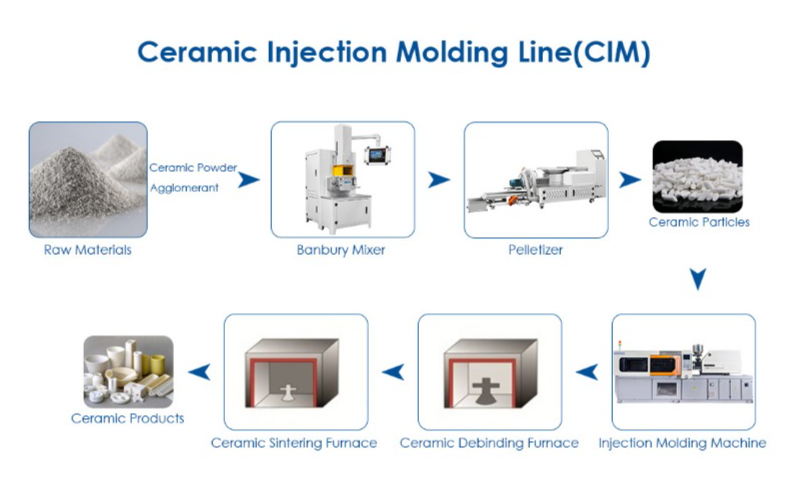
Figure 4: Precision ceramic injection molded (CIM) components manufactured by CRAC, demonstrating the companys capability in producing complex-geometry ceramic parts with tight dimensional tolerances. The same CIM technology enables the cost-effective mass production of ceramic dispersion discs with intricate tooth profiles that would be prohibitively expensive to machine from solid ceramic blanks.
Manufacturing Process of High-Quality Ceramic Dispersion Discs
The performance of a ceramic dispersion disc in lithium battery slurry processing is inseparable from the quality of its manufacturing. The production of dimensionally precise, structurally sound ceramic discs requires a sequence of carefully controlled processes, each contributing to the final components mechanical properties and geometric accuracy.
Ceramic Injection Molding (CIM): Enabling Complex Disc Geometries
Ceramic injection molding (CIM) is the preferred manufacturing route for producing ceramic dispersion discs with the complex peripheral tooth geometries essential for high-shear performance. The CIM process begins with compounding ceramic powder (zirconia or alumina) with a thermoplastic binder system to create a moldable feedstock. This feedstock is injected into a precision-engineered mold cavity under high pressure, faithfully replicating even the most intricate tooth profiles. The resulting green part then undergoes a two-stage thermal treatment: debinding, where the organic binder is removed through controlled thermal decomposition or solvent extraction, followed by high-temperature sintering at 1,450-1,600°C where the ceramic particles densify to achieve near-theoretical density.
The key advantage of CIM over conventional ceramic processing routes (such as dry pressing or slip casting) is its ability to produce near-net-shape parts with complex three-dimensional features. Tooth profiles that would require extensive and costly diamond grinding after sintering can be molded to within 0.5-1.0% of final dimensions, with only finish grinding of the shaft bore, mounting faces, and tooth edges required post-sintering. This manufacturing efficiency makes CIM-produced ceramic discs economically competitive with machined metal alternatives when total lifecycle costs including replacement frequency and slurry contamination-related yield losses are considered.
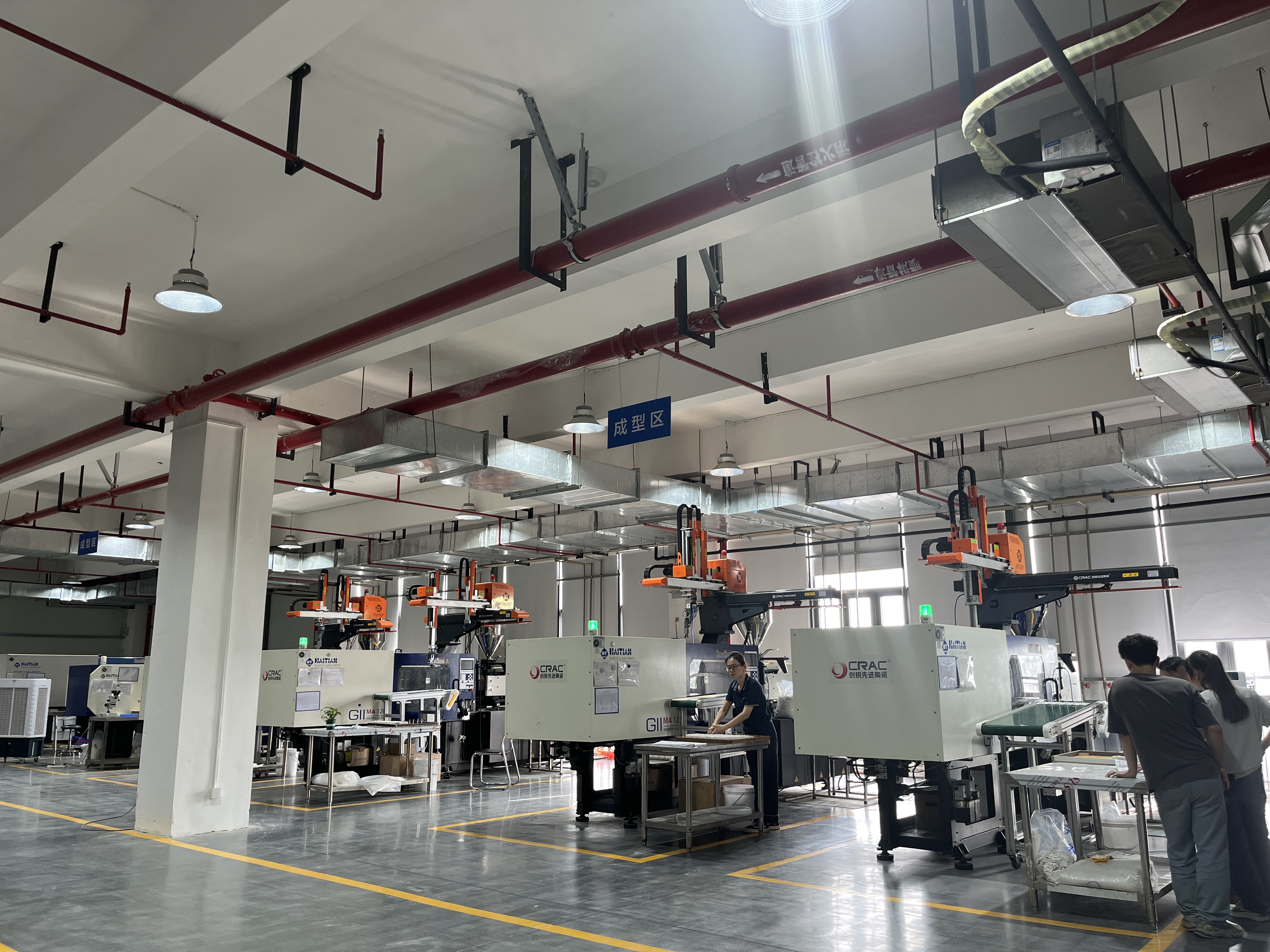
Figure 5: The ceramic injection molding (CIM) production workshop at CRACs advanced manufacturing facility. State-of-the-art injection molding machines produce ceramic dispersion disc green bodies with precise tooth geometry, achieving consistent quality across production batches. The controlled cleanroom environment minimizes particulate contamination during the molding stage.
Post-Sintering Processing and Quality Control
After sintering, each ceramic dispersion disc undergoes finish grinding of critical surfaces to achieve the required dimensional tolerances. Diamond grinding wheels progressively reduce surface roughness on the shaft bore to within 0.01 mm diametral tolerance and on tooth flanks to the specified edge radius. Following grinding, each disc is individually inspected for:
- Dimensional verification using coordinate measuring machines (CMM) to confirm all critical dimensions are within specification
- Dynamic balancing on precision balancing machines to G2.5 grade or better at the maximum rated operating speed
- Surface flaw detection using dye penetrant inspection to identify any micro-cracks or surface defects introduced during processing
- Density measurement via Archimedes method to confirm greater than 99.5% of theoretical density has been achieved
- Hardness testing to verify mechanical properties meet the specified grade requirements
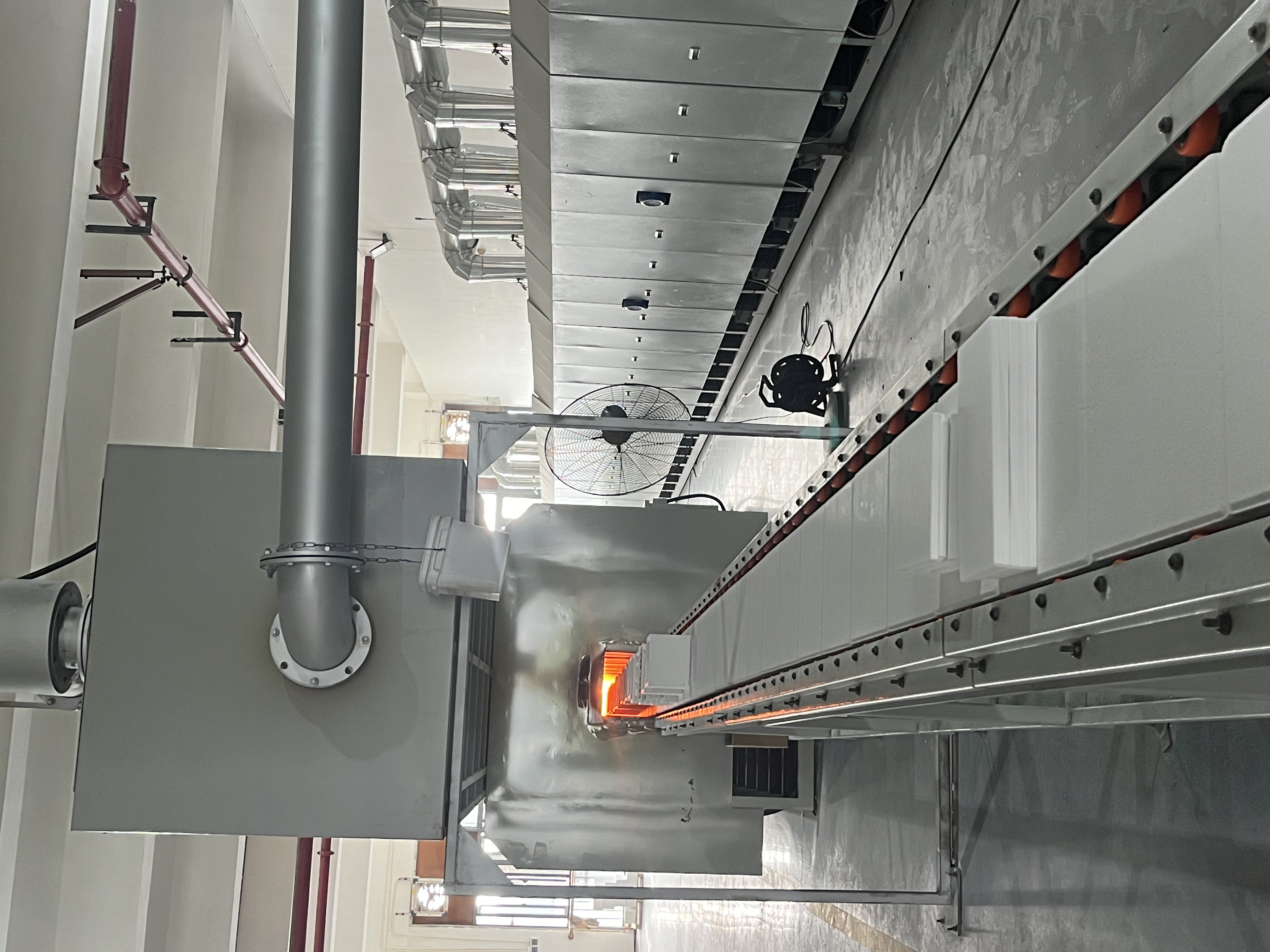
Figure 6: High-temperature sintering furnace at CRACs ceramic manufacturing plant. Ceramic dispersion disc green bodies are sintered at precisely controlled temperatures (1,450-1,600°C) to achieve full densification. The sintering profile heating rate, peak temperature, hold time, and cooling rate is optimized for each ceramic grade to maximize density, strength, and dimensional consistency across the production batch.
Ceramic vs. Metal vs. Polymer Dispersion Discs: A Comparative Analysis
| Property | Zirconia Ceramic | Alumina Ceramic | Stainless Steel 316L | PTFE-Coated |
|---|---|---|---|---|
| Hardness (HV) | 1,200-1,300 | 1,500-1,650 | 150-200 | 5-10 |
| Metal Ion Leaching | None | None | Fe, Cr, Ni | Fluoride ions |
| Service Life (NMC slurry) | 8,000-12,000 h | 5,000-8,000 h | 500-1,500 h | 200-500 h |
| Chemical Resistance | Excellent (NMP, H&sub2;O) | Excellent (NMP, H&sub2;O) | Good (pitting risk) | Fair (swelling in NMP) |
| Temperature Limit | 400°C+ | 1,000°C+ | 300°C | 260°C |
| Fracture Toughness | 6-10 MPa·m¹&sol2; | 3-4 MPa·m¹&sol2; | 50-100 MPa·m¹&sol2; | N/A (ductile) |
| Shear Profile Stability | Excellent | Excellent | Degrades with wear | Degrades rapidly |
| Relative Unit Cost | \$\$\$ | \$\$ | \$ | \$ |
| Lifecycle Cost (3 years) | \$ (lowest) | \$ (low) | \$\$\$ (highest) | \$\$\$ (high) |
Table 1: Comprehensive comparison of dispersion disc materials for lithium battery slurry processing. While ceramic discs carry a higher unit cost, their dramatically longer service life and elimination of contamination-related yield losses make them the most economical choice when total cost of ownership is evaluated over a typical three-year production horizon.
Applications Across the Lithium Battery Manufacturing Chain
NMC/NCA Cathode Slurry
High-nickel NMC (622, 811) and NCA cathode powders are among the most abrasive active materials due to their high hardness and irregular particle morphology. Zirconia ceramic dispersion discs are the standard choice in these applications, providing the necessary wear resistance to prevent metal contamination in cells where even trace iron or chromium dramatically accelerates capacity degradation. The stable shear profile of ceramic discs is particularly valued when processing NMC slurries with demanding solids loading targets of 65-72 wt%.
LFP Cathode Slurry
Lithium iron phosphate (LFP) cathode processing presents a different challenge: the nano-scale primary particles (50-200 nm) of LFP require intense shear to de-agglomerate, while the material's lower electronic conductivity demands highly uniform conductive carbon coating. Alumina ceramic discs offer an optimal cost-performance balance for LFP slurry lines, combining sufficient hardness with the chemical inertness necessary for water-based processing with CMC/SBR binder systems.
Graphite Anode Slurry
Natural and synthetic graphite anode slurries are typically water-based and processed at moderate solids loadings (45-55 wt%). While graphite itself is less abrasive than cathode materials, the presence of conductive carbon black additives requires effective high-shear dispersion. Ceramic discs prevent the gradual build-up of iron contamination that can catalyze electrolyte decomposition at the anode-electrolyte interface during SEI formation cycling.
Silicon-Carbon Composite Anode
High-capacity Si-C composite anodes present the most demanding dispersion challenge. Silicon nanoparticles (30-100 nm) have an extremely high tendency to agglomerate due to their enormous specific surface area, and the carbon matrix must be intimately mixed at the nanoscale to buffer the 300% volume expansion of silicon during lithiation. Alumina or silicon nitride discs, operated at the upper range of tip speeds, deliver the intense shear fields required for this application.
Conductive Slurry Pre-dispersion
Many battery manufacturers pre-disperse conductive carbon additives (Super P, Ketjenblack, CNTs) as a concentrated masterbatch before blending with active materials. This pre-dispersion step requires exceptionally high shear to break down carbon agglomerates to their primary structure. The sustained cutting action of a ceramic dispersion disc at high peripheral speeds achieves the carbon dispersion quality that directly determines electrode electronic conductivity and rate capability.
Solid-State Electrolyte Slurries
Emerging solid-state battery technologies require dispersion of ceramic electrolyte powders (LLZO, LATP, LPS) into polymer or liquid-phase precursors. The chemical compatibility of ceramic dispersion discs with these reactive sulfide and oxide electrolyte materials is essential, as even trace metal contamination can poison ionic conductivity. Zirconia discs are predominantly specified for solid-state electrolyte processing.

Figure 7: Ceramic dispersion disc showcasing the mounting configuration for industrial disperser integration. The precision-ground shaft bore and keyway ensure secure, concentric mounting on the disperser drive shaft, maintaining the tight running clearances essential for uniform shear distribution. This design is compatible with standard high-speed dispersers, planetary mixers, and twin-shaft mixer configurations commonly deployed in lithium battery electrode manufacturing lines.
Operational Parameters for Optimal Dispersion Performance
Achieving the full performance potential of a ceramic dispersion disc requires careful attention to operating parameters. The following guidelines represent industry best practices for lithium battery slurry processing.
| Parameter | Recommended Range | Impact on Dispersion Quality |
|---|---|---|
| Peripheral Tip Speed | 10-25 m/s | Primary determinant of shear intensity. Higher speeds improve de-agglomeration but increase power consumption and slurry heating. |
| Dispersion Time | 30-120 min | Sufficient time must be allowed for all powder to pass through the high-shear zone multiple times. Over-dispersion can damage active material crystallites. |
| Solids Loading | 45-72 wt% | Higher solids loading increases slurry viscosity and shear stress transmission efficiency but may require staged powder addition to prevent motor overload. |
| Slurry Temperature | 20-40°C | Temperature control via jacketed vessel or external cooling is essential to prevent solvent evaporation and premature binder gelation. |
| D/T Ratio | 0.3-0.5 | Disc diameter to tank diameter ratio affects flow pattern. Smaller ratios favor bulk circulation; larger ratios favor high-intensity local shear. |
| Disc Position (off-bottom) | 0.5-1.0 x disc dia. | The vertical clearance between the disc and vessel bottom influences suspension of settled solids and vortex formation. |
Table 2: Recommended operating parameters for ceramic dispersion discs in lithium battery slurry processing.
Selection Guide: Choosing the Right Ceramic Dispersion Disc
| Application Scenario | Recommended Material | Tooth Profile | Key Selection Rationale |
|---|---|---|---|
| NMC/NCA cathode (high-nickel) | Y-TZP Zirconia | Saw-tooth | Maximum wear resistance and toughness; zero metal contamination for high-voltage cells |
| LFP cathode (water-based) | Alumina (99.5%+) | Square-tooth | Cost-effective with excellent chemical stability in aqueous CMC/SBR systems |
| Graphite anode (water-based) | Alumina | Radial-slot | Sufficient hardness; radial slots enhance bulk circulation for lower-viscosity slurries |
| Si-C composite anode | Alumina or Si&sub3;N&sub4; | Saw-tooth | High shear required for nano-silicon de-agglomeration; thermal stability for exothermic mixing |
| Conductive additive pre-dispersion | Zirconia | Saw-tooth (fine pitch) | Fine-pitch teeth maximize shear events per revolution for carbon black/CNT dispersion |
| Solid-state electrolyte | Y-TZP Zirconia | Square-tooth | Chemical inertness to sulfide electrolytes; no metal dissolution |
| Multi-chemistry pilot line | Zirconia | Square-tooth | Universal chemical compatibility; easy cleaning between chemistry changes |
Table 3: Application-specific ceramic dispersion disc selection guide for lithium battery manufacturing.
Maintenance and Service Life Optimization
While ceramic dispersion discs are engineered for extended service life, a structured maintenance program ensures optimal performance throughout the discs operational lifetime and maximizes return on the initial investment.
Visual Inspection Schedule
Conduct visual inspections of the ceramic dispersion disc at 500-hour intervals or during scheduled mixer maintenance windows. Look for tooth edge chipping, surface glazing, or any visible crack initiation. Early detection of edge damage allows for proactive replacement before disc geometry degradation affects slurry quality. Use a borescope or magnification for detailed tooth inspection without full disassembly when possible.
Cleaning Protocol
Between slurry batches, particularly when changing active material chemistry, clean the disc thoroughly with the appropriate solvent: NMP for cathode slurries, deionized water for anode slurries. Avoid wire brushes or metal scrapers that can introduce metallic contamination onto the ceramic surface. Ultrasonic cleaning baths provide effective removal of residue from tooth crevices without mechanical abrasion risk.
Replacement Triggers
Replace the ceramic disc when any of the following conditions are observed: tooth edge radius exceeds 0.5 mm (measured with radius gauge), visible chipping greater than 1 mm in any dimension, measurable increase in slurry metal content (indicating possible micro-fracture), or a consistent upward trend in slurry particle size D50 suggesting reduced shear effectiveness. Tracking these metrics per disc enables data-driven replacement scheduling.
Balancing and Vibration Monitoring
Monitor disperser shaft vibration levels as an indirect indicator of disc condition. An increasing vibration trend may signal uneven tooth wear, accumulated residue causing imbalance, or mounting interface degradation. As a preventive measure, re-balance the disc assembly after every 2,000 hours of operation or whenever the disc is removed and re-installed on the shaft. Maintain vibration levels within the disperser manufacturers specified limits.
Frequently Asked Questions
Q: What is the maximum operating speed for a ceramic dispersion disc?
The maximum safe operating speed depends on disc diameter and material grade. As a general guideline, peripheral tip speeds up to 25 m/s are routinely achieved with properly balanced high-quality zirconia discs. For a 200 mm diameter disc, this corresponds to approximately 2,400 RPM. Always verify the specific speed rating with the manufacturer and confirm that the disperser drive system is compatible with the disc's rated maximum speed.
Q: Can a ceramic dispersion disc be used with both NMP-based and water-based slurries?
Yes. Both zirconia and alumina ceramics are chemically compatible with NMP, water, and common co-solvents used in battery slurry processing. However, when switching between solvent systems, thorough cleaning is essential to prevent cross-contamination. For facilities running both NMP-based cathode and water-based anode slurries, dedicated discs for each chemistry are recommended to eliminate any risk of water carryover into moisture-sensitive cathode materials.
Q: How does a ceramic disc affect slurry viscosity compared to a steel disc?
A ceramic disc of equivalent geometry and operating at the same tip speed delivers essentially identical slurry viscosity to a new steel disc. The difference emerges over time: as a steel disc wears and its tooth profile degrades, the shear intensity decreases and slurry viscosity trends upward due to incomplete de-agglomeration. The ceramic disc maintains stable viscosity output, providing consistent slurry rheology from batch to batch throughout its much longer service interval.
Q: Are ceramic dispersion discs more fragile than metal ones?
Ceramics are brittle materials and require appropriate handling procedures. However, engineering-grade zirconia (Y-TZP) used in dispersion discs has fracture toughness values of 6-10 MPa·m½, making it remarkably resistant to damage under normal operating conditions. The primary vulnerability is impact damage from tools during installation or removal, not from in-service loading. Proper training on ceramic component handling practices essentially eliminates the risk of accidental damage.
Q: What is the typical payback period for switching from steel to ceramic dispersion discs?
In high-volume NMC cathode slurry production, the payback period for converting from stainless steel to zirconia ceramic dispersion discs typically ranges from 6 to 12 months. This calculation accounts for eliminated steel disc replacement costs (6-10 steel disc changes per disc vs. one ceramic disc lasting the entire period), reduced production downtime, and measurable yield improvement from the elimination of metal-contaminated electrode batches. When the economic value of extended cell cycle life is factored in, the return on investment becomes even more compelling.
Q: Can ceramic discs be refurbished or re-sharpened?
Ceramic dispersion discs with minor edge wear or chipping can sometimes be re-ground to restore tooth geometry, but this process requires specialized diamond grinding equipment and must not compromise dimensional tolerances. In practice, most battery manufacturers replace rather than refurbish ceramic discs due to the critical nature of slurry quality. For zirconia discs, the long service life (8,000+ hours) means replacement is a relatively infrequent event, and the economics favor replacement over refurbishment.
Q: What disc diameter should I select for my existing disperser?
Disc diameter selection is constrained by the disperser motor power, shaft diameter, and tank dimensions. The diameter should achieve a D/T ratio of 0.3-0.5 relative to the mixing vessel inner diameter, while ensuring the required peripheral tip speed (typically 15-20 m/s for battery slurries) can be reached within the disperser's speed range. Consult with the disperser and disc manufacturers to verify compatibility, particularly regarding shaft torque capacity at the target operating speed with the higher-density ceramic disc (zirconia is approximately 50% denser than steel).
Ready to Upgrade Your Battery Slurry Processing?
Whether you are processing NMC, LFP, graphite, or next-generation silicon-carbon anode slurries, CRACs precision-engineered ceramic dispersion discs deliver the contamination-free, wear-resistant mixing performance that modern lithium battery manufacturing demands. Let our application engineers help you select the optimal disc material, tooth configuration, and operating parameters for your specific slurry formulation and production volume.
获取完整报价