
留言
Search Products


- 首页
- 新闻资讯
- Why Ceramic Plungers Are the Preferred Choice for High-Pressure Pump Systems
Why Ceramic Plungers Are the Preferred Choice for High-Pressure Pump Systems
Ceramic plungers are high-performance reciprocating pump components engineered from advanced technical ceramics such as yttria-stabilized zirconia and high-purity alumina, purpose-built for the extreme operating conditions of high-pressure pump systems. Unlike conventional metal plungers that succumb to abrasive wear, corrosive attack, and galling under sustained high-stress duty cycles, ceramic plungers deliver a fundamentally superior combination of surface hardness, chemical inertness, and dimensional stability. Across industries ranging from chemical processing and water jet cutting to oil and gas recovery and high-pressure cleaning, ceramic plungers are rapidly displacing hardened steel and coated metal alternatives as the definitive solution for achieving extended service intervals, reduced maintenance costs, and uncompromised fluid purity.
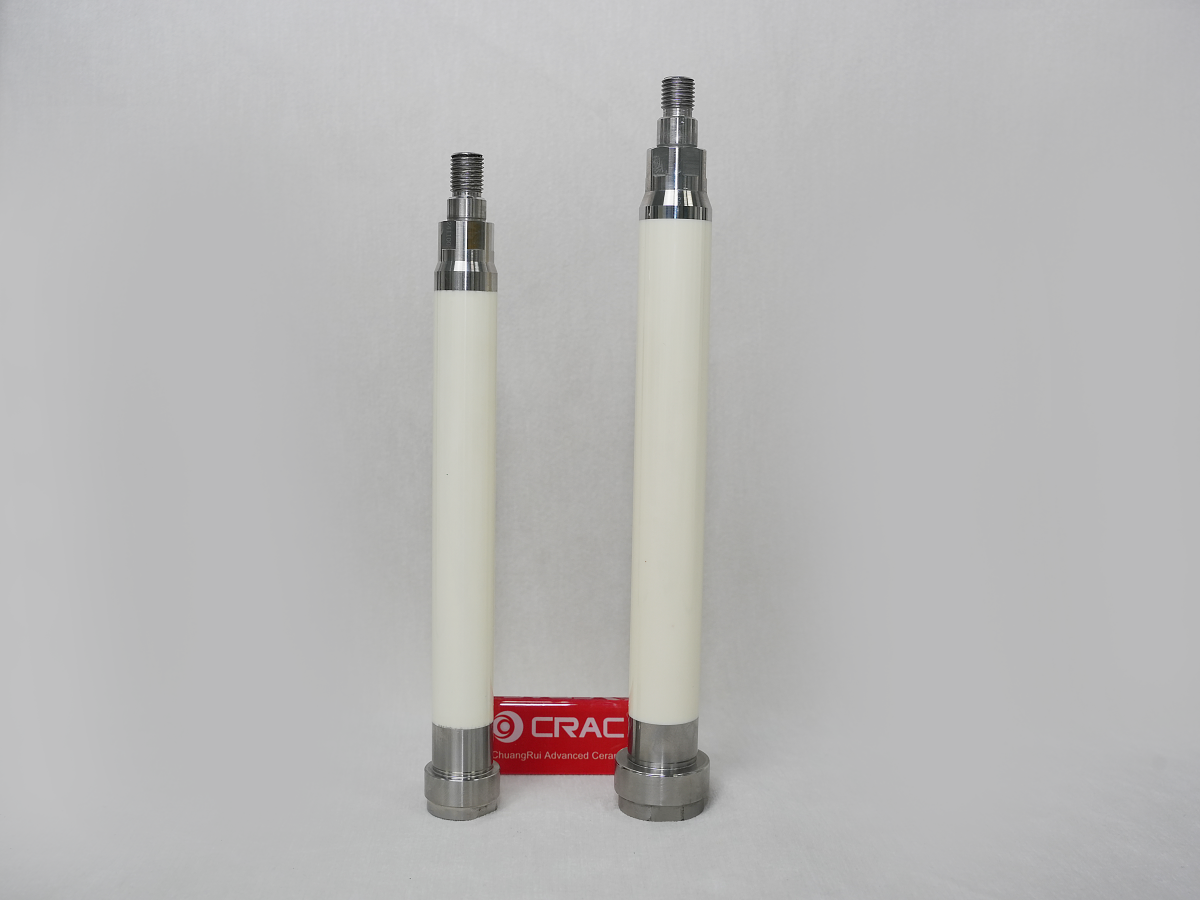
Figure 1: A pair of precision-ground ceramic plungers with integrated metal end fittings, showcasing the high surface finish and dimensional accuracy characteristic of advanced technical ceramic manufacturing. The bright white ceramic body composed of yttria-stabilized zirconia (Y-TZP) or high-purity alumina (Al2O3) provides exceptional hardness (exceeding 1,200 HV) and a sub-micron surface roughness (Ra < 0.05 μm) that dramatically reduces seal wear and extends packing life in high-pressure reciprocating pump applications.
What Is a Ceramic Plunger?
A ceramic plunger is a cylindrical reciprocating component machined from advanced technical ceramic materials, designed to slide within a packed stuffing box or seal assembly to generate and sustain fluid pressure in positive displacement pumps. In its simplest form, the plunger is a precision-ground ceramic rod typically ranging from 10 mm to 120 mm in diameter and 100 mm to 800 mm in length that reciprocates axially within a stationary sealing system. On the forward stroke, the plunger displaces fluid through a discharge check valve; on the return stroke, the resulting pressure differential draws fresh fluid into the pump chamber through a suction check valve. This reciprocating action, repeated at frequencies from tens to hundreds of strokes per minute, generates discharge pressures that can exceed 2,000 bar (200 MPa) in the most demanding applications.
What distinguishes a ceramic plunger from its metal counterpart is not the operating principle but the material science underlying its performance envelope. Metal plungers typically 17-4 PH stainless steel, 316L stainless steel, or chromium-plated carbon steel rely on surface hardening treatments and coatings to resist wear. However, under the combined assault of high contact stress, cyclic fatigue, corrosive process fluids, and abrasive suspended solids, these surface treatments degrade progressively. Pitting corrosion initiates at microscopic surface flaws; chrome plating delaminates from the substrate; galling between the plunger surface and packing material accelerates seal destruction. A ceramic plunger, by contrast, is monolithic: its wear resistance, corrosion resistance, and surface integrity are intrinsic bulk properties that do not degrade with depth or time.
The ceramic materials used for plunger fabrication principally yttria-stabilized tetragonal zirconia polycrystal (Y-TZP) and high-purity alumina (Al2O3) are selected for their complementary property profiles. Y-TZP combines hardness with fracture toughness through a transformation toughening mechanism, making it exceptionally resistant to the impact loading and thermal shock conditions encountered in high-cycle pump service. Alumina offers even higher hardness and superior chemical stability against aggressive acids and alkalis, albeit with lower fracture toughness. The choice between these materials is application-driven and represents one of the most consequential design decisions in engineering with advanced ceramics for fluid handling systems.
The Critical Role of Plungers in High-Pressure Pump Systems
To understand why the plunger material choice has such profound operational consequences, it is essential to examine the mechanical and tribological demands placed on this single component within the broader context of triplex and quintuplex plunger pump architecture. In a typical high-pressure plunger pump, the plunger is the component that directly interfaces with the pumped fluid, the sealing system, and the crank-driven reciprocating mechanism. It operates at the confluence of three intense degradation mechanisms:
Three Primary Failure Mechanisms in Metal Plungers
1. Abrasive Wear at the Plunger-Seal Interface
The stuffing box packing or lip seal exerts a radial clamping force against the reciprocating plunger surface to maintain a fluid-tight dynamic seal. As the plunger cycles through millions of strokes, the continuous sliding contact generates abrasive wear, particularly when the pumped fluid carries entrained solid particles. Metal plungers develop circumferential scoring and polishing tracks that progressively degrade seal effectiveness, causing leakage rates to rise and ultimately requiring unscheduled pump shutdown for plunger and packing replacement.
2. Corrosion and Pitting in Aggressive Fluids
High-pressure pumps frequently handle chemically aggressive media: acidic solutions in chemical processing, saline produced water in oilfield injection, caustic cleaning agents in industrial washdown systems, and seawater in offshore and marine applications. Even stainless steel grades with respectable bulk corrosion resistance are vulnerable to localized pitting and crevice corrosion, particularly in chloride-rich environments. Once a corrosion pit nucleates, it acts as a stress concentrator that accelerates both mechanical wear and further corrosion in a self-reinforcing degradation cycle.
3. Galling and Adhesive Wear Under Boundary Lubrication
At the reversal points of each stroke top dead center and bottom dead center the plunger momentarily approaches zero velocity while still under full sealing contact pressure. Under these boundary lubrication conditions, the fluid film that normally separates the plunger surface from the packing material collapses, permitting direct asperity contact. Metal plungers are prone to galling in this regime: microscopic cold welding between the plunger and packing surfaces, followed by tearing and material transfer that creates progressively worsening surface roughness.
How Ceramic Plungers Disrupt the Failure Cycle: Ceramic plungers address all three failure mechanisms simultaneously through their material properties. The extreme surface hardness of technical ceramics (1,200-1,650 HV) resists abrasive scoring from both packing contact and entrained solids. Their chemical inertness renders them immune to the full spectrum of corrosive process fluids, from concentrated acids to hot caustic solutions. And critically, ceramics do not gall: their ionic-covalent bonding precludes the metallic adhesion mechanism responsible for galling, ensuring that even under boundary lubrication conditions, the plunger surface remains dimensionally stable and free of material transfer defects.
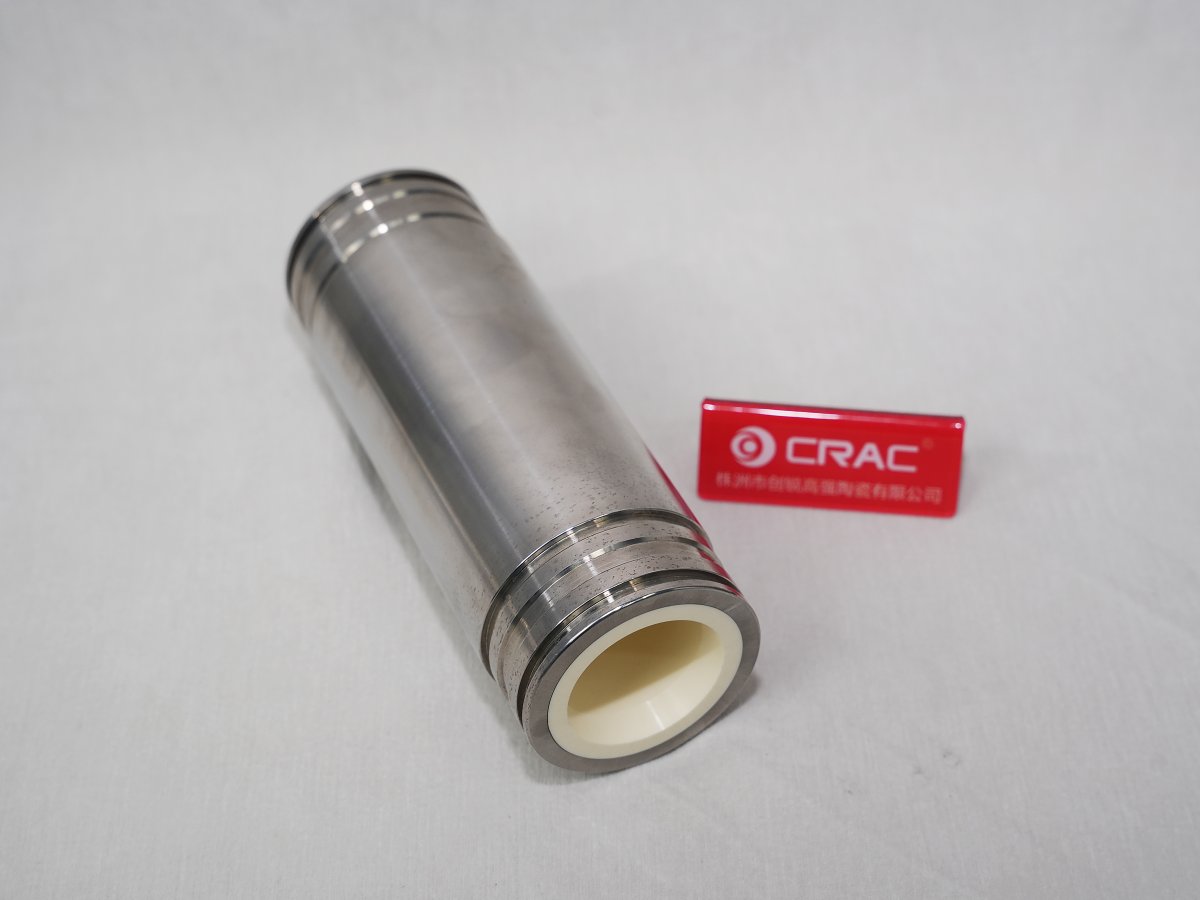
Figure 2: A ceramic plunger assembly featuring a precision ceramic rod integrated within a metallic sleeve or housing, illustrating the metal-to-ceramic bonding and assembly technology critical to high-pressure pump integration. The metal sleeve provides the mechanical interface for connection to the pump crosshead and power end, while the ceramic working surface exposed along the plunger length delivers the wear-resistant, corrosion-proof sliding surface that directly contacts the pump packing and process fluid. This hybrid design leverages the structural strength of metal for load transmission and the tribological superiority of ceramic for the sealing interface.
Material Advantages: Why Ceramic Outperforms Metal in High-Pressure Service
The performance superiority of ceramic plungers is rooted in the fundamental differences between metallic and ceramic material systems at the atomic and microstructural levels. Metals derive their mechanical properties from metallic bonding a sea of delocalized electrons that imparts ductility and toughness but also makes them susceptible to plastic deformation, corrosion, and galling. Technical ceramics, by contrast, are held together by strong ionic and covalent bonds that produce exceptional hardness, chemical stability, and high-temperature strength retention but also introduce brittleness as the primary design consideration. For plunger applications, where compressive loading dominates and impact is minimal, the brittleness limitation is far outweighed by the benefits.
1. Yttria-Stabilized Zirconia (Y-TZP) Plungers
Y-TZP ceramic plungers represent the premium tier of high-pressure pump components, offering a unique property combination unmatched by any metallic alternative. With a Vickers hardness of 1,200-1,350 HV, flexural strength exceeding 1,000 MPa, and fracture toughness of 6-10 MPa·m¹&sol2;, Y-TZP plungers withstand the most aggressive pumping environments. The transformation toughening mechanism intrinsic to Y-TZP the stress-induced tetragonal-to-monoclinic phase transformation that absorbs crack energy and arrests propagation provides a level of damage tolerance unusual for ceramic materials. Y-TZP plungers are the preferred choice for ultra-high-pressure water jet cutting (up to 4,000 bar), oilfield water injection, and chemical metering applications where both mechanical severity and chemical aggressiveness are extreme.
2. High-Purity Alumina (Al2O3) Plungers
Alumina plungers (typically ≥ 99.5% Al2O3) deliver the highest hardness among commercially viable plunger ceramics, reaching 1,500-1,650 HV values that provide exceptional resistance to abrasive wear from hard particulate matter. Alumina's chemical stability is outstanding: it resists attack from hydrochloric acid, sulfuric acid, sodium hydroxide, and virtually all organic solvents, making it the material of choice for chemical dosing pumps, acid injection systems, and pharmaceutical processing. The slightly lower fracture toughness of alumina (3.5-4.5 MPa·m¹&sol2;) compared to zirconia imposes some limitations on impact loading, but for clean-fluid pumping applications with minimal particulate hammer, alumina plungers offer an excellent cost-performance balance with a typical service life 5-10 times that of hardened stainless steel.
3. Silicon Carbide (SiC) and Silicon Nitride (Si3N4) Plungers
For specialized high-pressure applications, silicon carbide and silicon nitride plungers address niche requirements that neither zirconia nor alumina can fully satisfy. Silicon carbide, with its diamond-like hardness (~2,800 HV) and the highest thermal conductivity among structural ceramics, excels in applications where frictional heating at the plunger-seal interface is a concern. Silicon nitride, combining the hardness of alumina with the toughness of zirconia, offers the highest thermal shock resistance parameter of any structural ceramic, making it suitable for pumps that cycle between cryogenic and elevated temperatures. These materials, while more costly, have demonstrated decades of service in the most demanding advanced ceramics applications.
6 Key Performance Benefits of Ceramic Plungers
The material advantages of technical ceramics translate into measurable operational benefits that directly impact pump reliability, maintenance budgets, and process quality:
1. 5-15x Extended Service Life
Ceramic plungers routinely outlast hardened stainless steel plungers by a factor of 5 to 15 in abrasive and corrosive service. This translates directly to fewer pump teardowns, reduced spare parts inventory, and dramatic reductions in mean time between failures (MTBF) improvement. In water jet intensifier pumps operating at 3,800 bar, Y-TZP plungers have demonstrated operational lifetimes exceeding 4,000 hours compared to the 300-800 hours typical of 17-4 PH stainless steel plungers.
2. Extended Packing and Seal Life
The sub-micron surface finish achievable on ceramic plungers typically Ra < 0.05 μm after precision grinding and polishing reduces the coefficient of friction against packing materials by 30-50% compared to metal surfaces. Lower friction means less heat generation, slower packing wear, and extended seal replacement intervals. A smoother plunger surface also minimizes abrasive particulate entrapment at the seal interface, further protecting packing integrity.
3. Zero Corrosion, Zero Contamination
Technical ceramics are chemically inert across the full pH spectrum and resistant to essentially all organic solvents, oxidizing agents, and reducing chemicals encountered in industrial pumping. This eliminates both the gradual wall thinning from uniform corrosion and the catastrophic pitting from localized attack that plagues metal plungers. Equally important, ceramic plungers contribute zero metallic contamination to the pumped fluid a critical requirement in pharmaceutical, food processing, and semiconductor-grade chemical delivery systems.
4. Dimensional Stability at Temperature
Ceramic plungers maintain their diameter, straightness, and surface finish across temperature ranges that would induce thermal expansion and dimensional drift in metal components. The low coefficient of thermal expansion of alumina (~8.0 × 10⁻⁶ /K) and zirconia (~10.0 × 10⁻⁶ /K) ensures that the critical plunger-to-bore clearance remains within design tolerances from cold start to steady-state operation, maintaining volumetric efficiency and preventing internal leakage.
5. Reduced Energy Consumption
The lower coefficient of friction of polished ceramic surfaces against standard pump packing materials reduces the frictional component of the pump power requirement. Field measurements on triplex plunger pumps retrofitted with Y-TZP plungers have documented power consumption reductions of 5-12% compared to chromium-plated steel plungers, attributable to reduced packing drag and the elimination of the progressive friction increase that occurs as metal plungers develop surface scoring over time.
6. Predictable, Repeatable Performance
Unlike metal plungers, whose wear rate accelerates as surface degradation compounds, ceramic plungers exhibit a near-linear, extremely slow wear progression that makes pump performance predictable over the full service interval. This predictability enables condition-based maintenance scheduling rather than reactive emergency repairs, significantly reducing unplanned downtime in continuous process industries where a single pump stoppage can halt an entire production line.
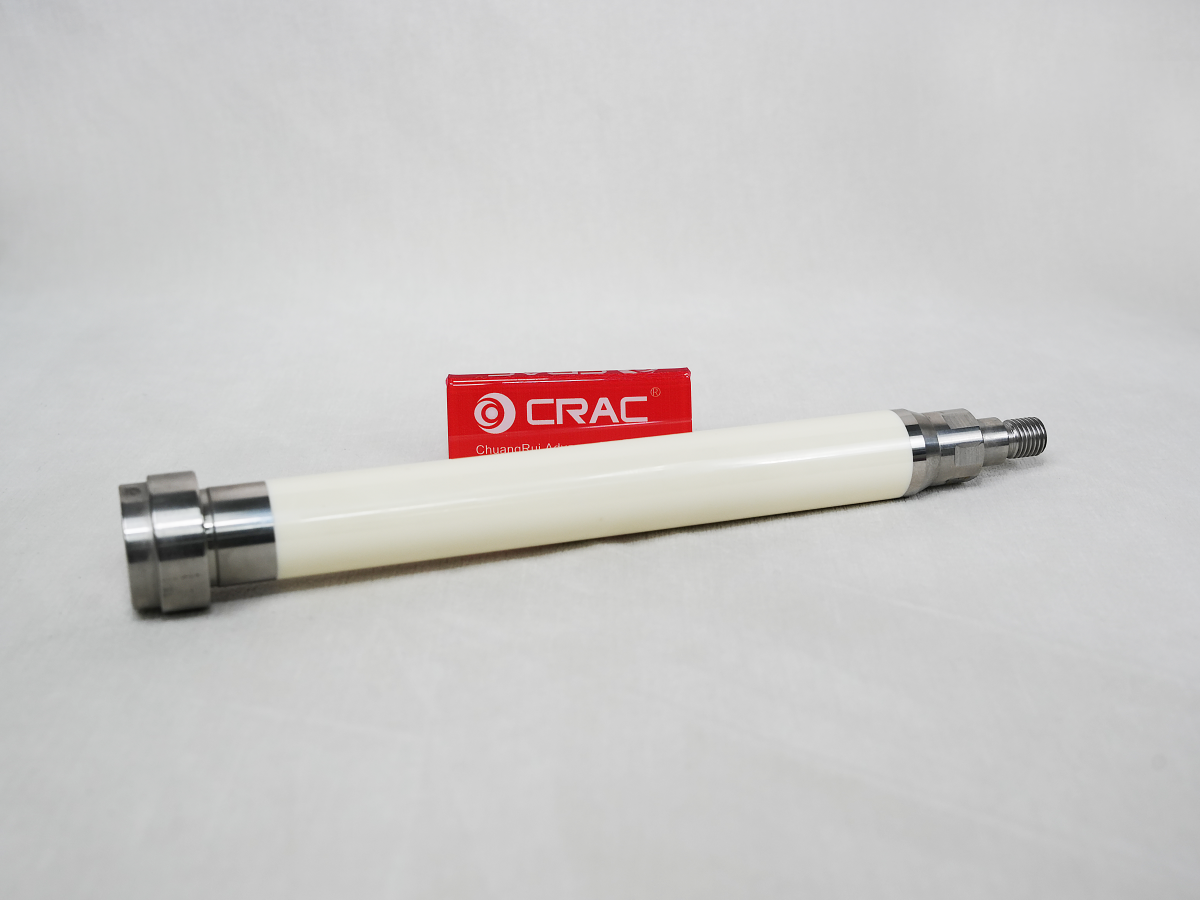
Figure 3: A single ceramic plunger displayed in horizontal orientation, highlighting the full-length precision-ground working surface that interfaces with the pump packing and process fluid. The uniform cylindrical geometry, achieved through advanced ceramic grinding and lapping processes, ensures consistent diametral clearance along the entire stroke length an essential requirement for maintaining volumetric efficiency and preventing localized packing wear. The bright white surface appearance is characteristic of high-density, low-porosity technical ceramics with a surface finish optimized for the tribological demands of high-pressure reciprocating service.
Critical Design Features of High-Performance Ceramic Plungers
The performance of a ceramic plunger is determined not only by the intrinsic material properties of the ceramic but also by the precision with which it is designed, ground, and finished. Several geometric and surface characteristics are critical to plunger function and must be tightly controlled during manufacturing:
Diametral Tolerance and Roundness
The plunger outer diameter must be held to sub-10-micron tolerances (typically IT5-IT6 grade) to maintain the precise running clearance required between the plunger surface and the stuffing box bore or seal housing. Roundness must be controlled to within 2-5 μm to prevent uneven packing compression, which would create localized zones of accelerated wear and premature leakage. Ceramic plungers are ground between centers on precision cylindrical grinders equipped with diamond wheels, then finish-lapped to achieve the required geometric accuracy.
Surface Finish and Texture
The surface finish of the plunger working surface is arguably the single most critical quality parameter. A roughness average (Ra) of 0.02-0.05 μm is the standard target for ceramic plungers, achieved through diamond lapping and polishing processes. This mirror-grade finish serves multiple functions: it minimizes abrasive wear on packing materials; it reduces the real contact area under load, lowering friction; and it eliminates the microscopic surface valleys where corrosive fluids could stagnate and initiate localized attack. Post-polish inspection under interferometric or stylus profilometry verifies compliance.
End Geometry and Attachment Features
The ends of the ceramic plunger must be designed for secure attachment to the pump crosshead or connecting rod while managing the stress concentrations that arise at the metal-to-ceramic interface. Common attachment methods include threaded metal end caps bonded to the ceramic body with high-strength structural adhesives, interference-fit metal sleeves secured by thermal shrink-fitting, and flanged ceramic ends that are mechanically clamped. The transition geometry between the cylindrical working surface and the end features must incorporate generous radii to prevent stress concentrations that could initiate fracture under cyclic loading.
Cylindricity and Straightness
Over the full working length of the plunger, straightness deviation must typically be held within 0.01-0.03 mm. Any bow or waviness in the plunger axis creates cyclic radial forces on the packing as the plunger reciprocates, leading to non-uniform seal compression and accelerated localized wear. Cylindricity the degree to which the entire plunger surface conforms to a perfect theoretical cylinder is measured using coordinate measuring machines (CMM) or precision V-block methods, with typical tolerances of 5-10 μm for high-performance pump applications.
How Ceramic Plungers Are Manufactured
The manufacturing pathway from ceramic powder to finished plunger is a multi-stage process that demands rigorous control at every step. The objective is to produce a fully dense, flaw-free ceramic body with the precise geometry and surface finish required for high-pressure pump service. The process typically follows this sequence:
Step 1: Powder Preparation
High-purity ceramic powder (Y-TZP or Al2O3) is mixed with organic binders, plasticizers, and sintering aids in a precisely controlled formulation. The resulting feedstock must have uniform particle size distribution and consistent rheological properties to ensure reproducible forming behavior.
Step 2: Green Body Forming
Plunger blanks are formed by cold isostatic pressing (CIP) at pressures of 200-400 MPa, producing near-net-shape green bodies with uniform density distribution. For smaller plungers, dry pressing or ceramic injection molding (CIM) may be used. The forming method directly influences final density homogeneity and must be optimized for the plunger aspect ratio.
Step 3: Green Machining
In the unfired green state, the ceramic blank is machined to an intermediate geometry using carbide or diamond tooling. Green machining removes forming flash, creates attachment features, and establishes rough diametral dimensions, taking advantage of the material's relative softness before sintering to reduce the amount of difficult hard-ceramic grinding required later.
Step 4: Sintering
The green-machined blank is sintered at temperatures of 1,450-1,650°C (depending on material) in controlled-atmosphere furnaces. During sintering, the ceramic densifies to ≥99.5% of theoretical density as the powder particles coalesce, eliminating internal porosity. Linear shrinkage of 15-25% must be accurately predicted to achieve final dimensions.
Step 5: Diamond Grinding
The sintered ceramic blank is centerless-ground or cylindrical-ground using resin-bonded diamond wheels to achieve the target outer diameter, roundness, and straightness. Rough grinding removes the bulk of the stock allowance; finish grinding progressively refines the geometry to within micron-level tolerances using successively finer diamond grit sizes.
Step 6: Lapping and Polishing
The final surface finish is achieved through diamond lapping and polishing, which progressively reduces surface roughness to the target Ra < 0.05 μm. This step removes the grinding-induced subsurface damage layer and produces the mirror-grade, low-friction surface essential for extended packing life and reduced seal degradation.
Step 7: Quality Inspection
Every ceramic plunger undergoes 100% dimensional inspection (diameter, roundness, straightness, surface finish), dye penetrant inspection for surface flaws, and in many cases, ultrasonic testing for internal defects. Only plungers meeting the complete specification are released for assembly, ensuring that every component installed in a high-pressure pump delivers consistent, predictable performance.
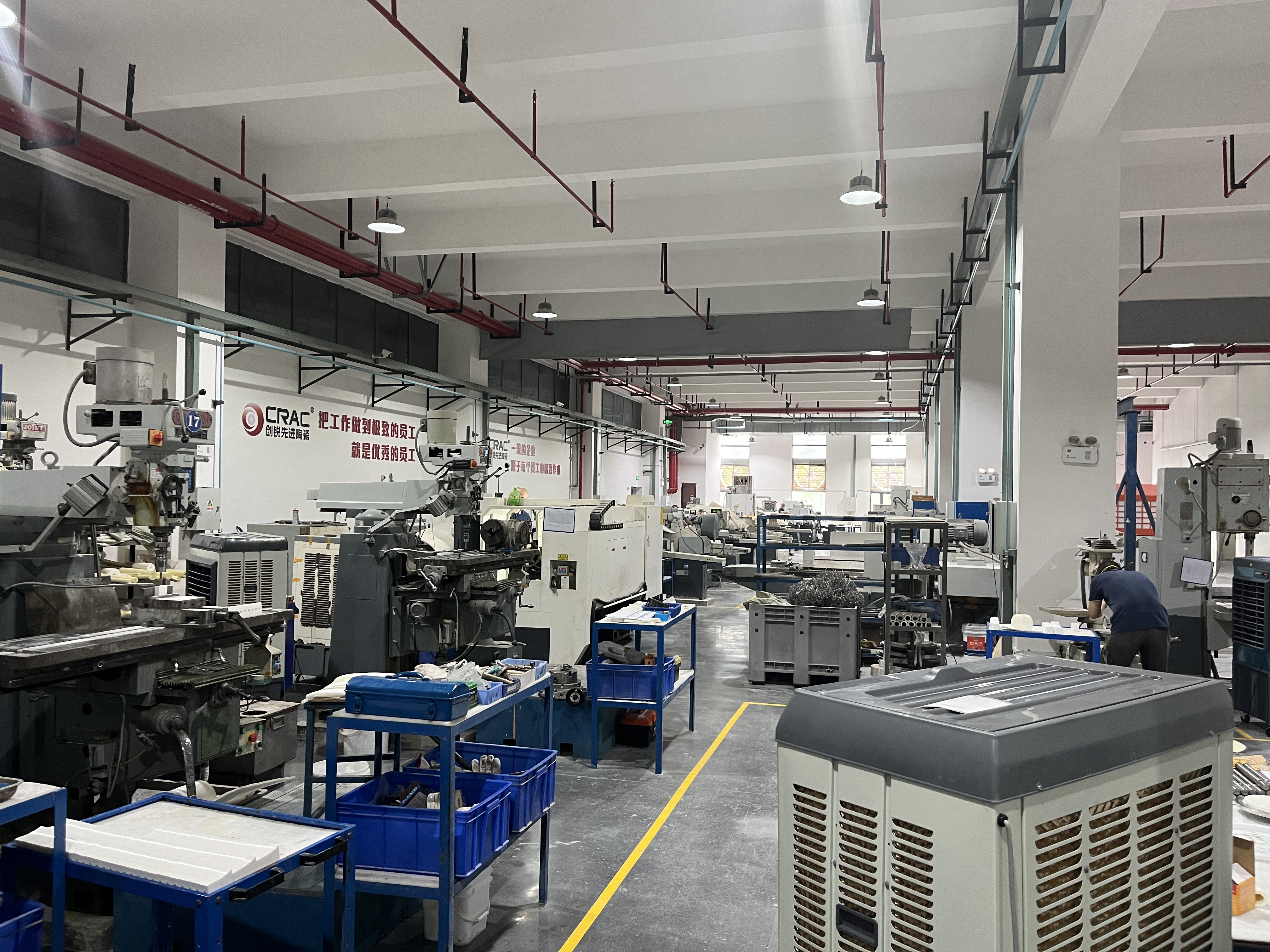
Figure 4: A precision machining and finishing workshop dedicated to advanced ceramic component production, including the cylindrical grinding and polishing of ceramic plungers. Specialized diamond grinding equipment, CNC cylindrical grinders, and lapping machines are employed to achieve the sub-micron surface finish (Ra < 0.05 μm) and tight diametral tolerances (IT5-IT6 grade) that define high-performance ceramic plungers for high-pressure pump applications.
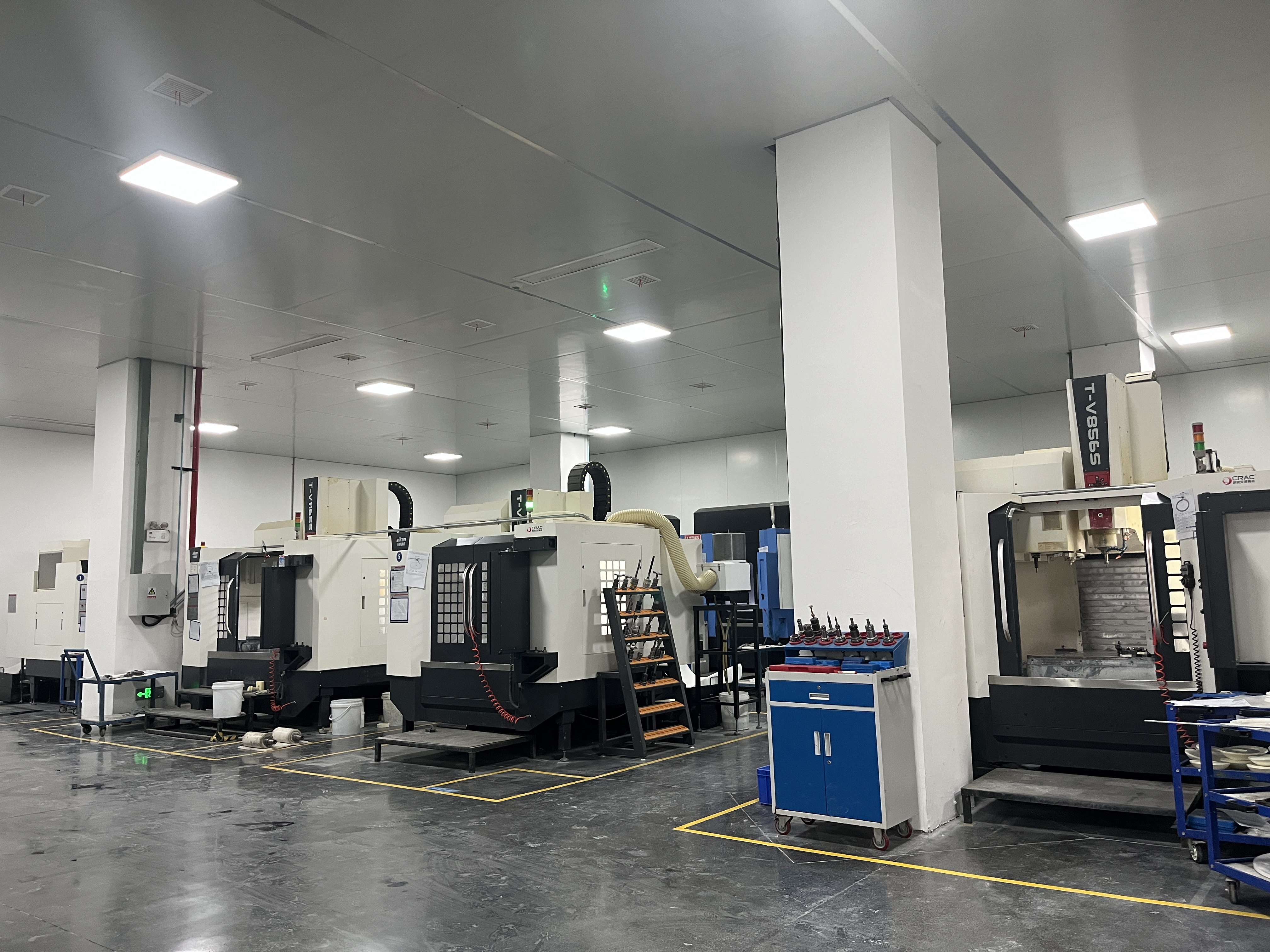
Figure 5: A CNC machining center configured for ceramic component manufacturing, illustrating the precision-controlled environment required for green machining and post-sinter hard ceramic processing. Computer numerical control ensures repeatable geometry across production batches, with tool path parameters specifically optimized for the unique cutting mechanics of technical ceramics to prevent edge chipping, subsurface damage, and micro-crack initiation during material removal.
Ceramic vs. Metal Plunger Materials: Comprehensive Comparison
The table below provides a quantitative comparison of the key material properties relevant to high-pressure plunger performance across ceramic and metallic material options:
| Property | Y-TZP Zirconia | Alumina (99.5%) | 17-4 PH Steel | 316L Stainless | Chrome-Plated Steel |
|---|---|---|---|---|---|
| Hardness (HV) | 1,200-1,350 | 1,500-1,650 | 380-440 | 150-200 | 800-1,000 (coating) |
| Flexural Strength (MPa) | 900-1,200 | 350-400 | 1,000-1,300 | 485-620 | 700-900 |
| Fracture Toughness (MPa·m¹&sol2;) | 6-10 | 3.5-4.5 | 50-150 | 100-200 | 50-100 |
| Density (g/cm³) | 6.05 | 3.92 | 7.80 | 8.00 | 7.85 |
| Corrosion Resistance | Excellent | Excellent | Moderate | Good (Cl pitting risk) | Poor (coating dependent) |
| CTE (10-6/K) | 10.0 | 8.0 | 10.8 | 16.0 | 11.0 |
| Thermal Conductivity (W/m·K) | 2.5-3.0 | 28-35 | 18 | 16 | 40-50 |
| Maximum Service Temp (°C) | 800-1,000 | 1,500-1,700 | 315 | 400 | 250 (coating limit) |
| Galling Resistance | Immune | Immune | Poor (prone) | Poor (prone) | Moderate |
| Typical Plunger Life (relative) | 5-15x | 5-10x | 1x (baseline) | 0.5-1x | 1-2x |
Data represents typical values for commercially available materials. Actual performance depends on specific grade, manufacturing quality, and operating conditions. Plunger life comparisons are based on water jet cutting and chemical injection service at pressures of 1,000-4,000 bar.
8 Industries Where Ceramic Plungers Deliver Transformative Benefits
The advantages of ceramic plungers are most pronounced in applications where the combined demands of pressure, fluid aggressiveness, and reliability converge to overwhelm conventional metal components:
1. Water Jet Cutting
Ultra-high-pressure intensifier pumps operating at 3,800-6,200 bar represent the most extreme test of plunger durability. Y-TZP ceramic plungers have become the industry standard in water jet cutting, delivering 3,000-4,000+ hour service intervals compared to 300-800 hours for hardened steel. The elimination of chrome plating delamination a chronic failure mode in water jet pump plungers alone justifies the ceramic upgrade in terms of reduced downtime in high-throughput cutting operations.
2. Oil & Gas Injection and Recovery
Water injection pumps for enhanced oil recovery (EOR), chemical injection pumps for well stimulation, and produced water reinjection pumps all handle corrosive, solids-laden fluids at pressures of 200-700 bar. Ceramic plungers resist the chloride-induced pitting that rapidly degrades stainless steel in produced water service and withstand the abrasive wear from entrained formation sand and scale particles. Offshore platforms particularly benefit from the reduced maintenance logistics enabled by extended plunger life.
3. Chemical Processing and Metering
Chemical metering and dosing pumps must accurately deliver aggressive fluids sulfuric acid, sodium hydroxide, hydrochloric acid, organic solvents while maintaining flow precision over thousands of operating hours. Alumina and zirconia plungers, chemically inert to these media, eliminate the progressive dimensional change from corrosion that degrades metering accuracy in metal plunger pumps. Both chemical processing and petrochemical applications rely on ceramic plungers for precise, contamination-free fluid delivery.
4. High-Pressure Cleaning and Hydroblasting
Industrial high-pressure washers and hydroblasting systems operating at 500-3,000 bar subject plungers to both mechanical wear and chemical exposure from cleaning agents, descaling solutions, and occasionally salt water. Ceramic plungers provide the reliability demanded by rental equipment fleets, shipyard maintenance crews, and industrial cleaning contractors who cannot afford pump failures during critical operations. The elimination of chrome plating flaking also prevents contamination of cleaned surfaces.
5. Pharmaceutical and Food Processing
High-pressure homogenization pumps in pharmaceutical manufacturing and food processing require plungers that meet stringent Clean-in-Place (CIP) and Sterilize-in-Place (SIP) compatibility while contributing zero metal contamination to the product stream. Alumina ceramic plungers, which are FDA-compliant for food contact and resistant to CIP chemicals and steam sterilization temperatures, are increasingly specified for dairy homogenizers, pharmaceutical nano-suspension processors, and cosmetic micro-emulsion pumps.
6. Semiconductor and Electronics Manufacturing
High-purity chemical delivery systems in semiconductor fabrication require plungers that introduce absolutely no metallic contamination into ultrapure water, photoresist developers, etchants, and CMP (chemical mechanical planarization) slurries. Even parts-per-billion levels of metal ions can cause IC device defects. Ceramic plungers manufactured from ultra-high-purity alumina (99.9%+) are the standard choice for these applications, where the cost of a single wafer lot contamination event dwarfs the incremental cost of ceramic components.
7. Marine and Offshore Systems
Seawater service pumps on ships, offshore platforms, and desalination plants subject plungers to continuous chloride exposure the most aggressive pitting corrosion environment for stainless steel. Ceramic plungers, inherently immune to chloride attack, eliminate the costly cycle of plunger replacement and associated vessel downtime. The weight advantage of alumina plungers (half the density of steel) also contributes to reduced inertial loads in large-bore pump applications.
8. Mining and Mineral Processing
High-pressure pumps in mining applications handle abrasive slurries, acidic mine water, and highly alkaline process liquors with substantial suspended solids content. Ceramic plungers provide the hard, wear-resistant surface needed to withstand the three-body abrasion that occurs when hard mineral particles are trapped between the plunger and packing. In mineral processing and tailings management, ceramic plungers have demonstrated mean time between replacements 8-12 times longer than hardened steel alternatives.
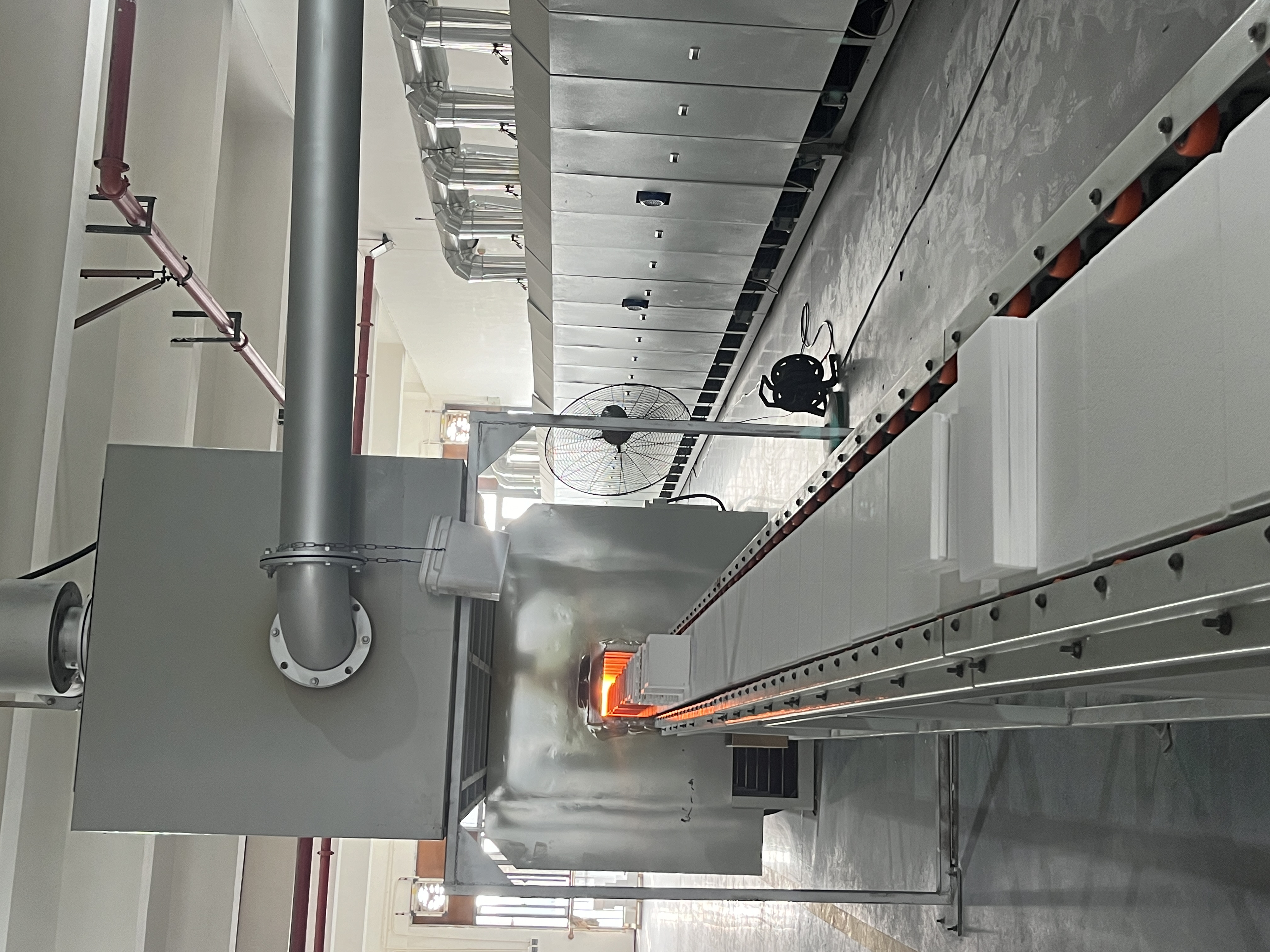
Figure 6: A high-temperature sintering furnace used in the ceramic plunger manufacturing process. During sintering at temperatures of 1,450-1,650°C in precisely controlled atmospheres, the ceramic green body densifies to over 99.5% of theoretical density, transforming from a weakly bonded powder compact into a fully dense, high-strength structural ceramic. The sintering cycle temperature ramp rate, soak duration, atmosphere composition, and cooling profile is critically engineered to achieve the uniform microstructure, minimal grain growth, and zero internal porosity required for reliable high-pressure pump service.
How to Select the Right Ceramic Plunger for Your Application
The selection of a ceramic plunger involves balancing material properties against application-specific demands. The following decision matrix guides the selection process:
| Application / Condition | Recommended Material | Rationale |
|---|---|---|
| Ultra-high pressure (>2,000 bar) | Y-TZP Zirconia | Transformation toughening provides the damage tolerance needed at extreme pressures |
| Highly corrosive acids (HCl, H2SO4) | Alumina (99.5%+) | Superior chemical stability across full pH spectrum; cost-effective |
| Abrasive slurry with solids | Alumina or Y-TZP | Alumina for maximum hardness; Y-TZP if impact loading present |
| Seawater / high-chloride service | Y-TZP Zirconia | Y-TZP exhibits the best resistance to hydrothermal degradation in aqueous chloride |
| Elevated temperature (>200°C) | Alumina or SiC | Retains full hardness and dimensional stability at temperatures that soften metals |
| Pharmaceutical / food grade | Alumina (99.5%+) | FDA-compliant; compatible with CIP/SIP chemicals and steam sterilization |
| Semiconductor ultrapure chemicals | Alumina (99.9%+) | Ultra-high purity grade eliminates metal ion leaching risk |
| Budget-sensitive, moderate duty | Alumina (95-99%) | Lower-purity grades offer good performance at reduced cost for less aggressive service |
Note: For applications involving both extreme pressure and severe chemical aggression (e.g., acid injection at 3,000+ bar), a detailed engineering review considering the combined thermomechanical and chemical environment is essential. Contact CRAC technical support for application-specific material selection guidance.
Recommended Operating Parameters for Ceramic Plungers
While ceramic plungers dramatically outperform metal alternatives, their operating envelope must be respected to achieve the full service life potential. The following parameters represent general guidelines for ceramic plunger applications:
| Parameter | Recommended Range | Critical Limit | Notes |
|---|---|---|---|
| Maximum Linear Speed | 1.5-2.5 m/s (Y-TZP) 1.0-1.8 m/s (Al2O3) |
Exceeding these limits increases frictional heating at the packing interface | |
| Packing Compression | Light-to-moderate gland preload | Lower compression than metal plungers; excess preload increases friction without sealing benefit | |
| Fluid Temperature | -20 to 200°C | 800°C (Y-TZP) 1,500°C (Al2O3) |
Packings and seals, not ceramics, typically define the temperature limit |
| Alignment Tolerance | ≤ 0.05 mm TIR | Ceramics less tolerant of bending misalignment than ductile metals; rigid alignment essential | |
| Minimum Fluid Lubrication | Continuous wetting of plunger surface required | Dry running even momentarily causes rapid packing degradation and thermal shock risk | |
| Particle Size in Fluid | < 50 μm recommended | Larger particles can embed in packing and act as three-body abrasives on plunger surface | |
| Stroke Rate (strokes/min) | Application-dependent; typically 50-400 spm | Higher stroke rates increase inertial loads; verify attachment design for fatigue resistance | |
Maintenance and Care of Ceramic Plungers
While ceramic plungers require significantly less maintenance intervention than metal alternatives, proper care practices maximize the already impressive service life:
1. Regular Inspection Schedule
Establish a planned inspection interval based on operating hours rather than waiting for leakage or performance degradation. During inspection, examine the plunger surface under magnification for circumferential scoring, check for edge chipping at the plunger ends, and verify that the ceramic-to-metal attachment interface shows no signs of looseness or adhesive degradation. Document micrometer measurements at multiple axial positions to track wear progression.
2. Cleaning and Handling
Ceramic plungers should be cleaned with mild solvents or detergents and soft cloths never with abrasive pads, wire brushes, or metal scrapers that could scratch the polished surface. During removal and reinstallation, protect the plunger surface from impact with hard objects. Store plungers in individual protective sleeves or padded racks that prevent ceramic-to-ceramic or ceramic-to-metal contact. Never stack ceramic plungers directly against each other.
3. Packing Replacement Triggers
Replace packing at the first sign of elevated leakage or increased friction not when catastrophic seal failure occurs. Because the ceramic plunger surface is exceptionally hard, degraded packing containing embedded abrasive particles can act as a lapping compound, slowly polishing annular grooves into the plunger. Proactive packing replacement protects both the plunger and the stuffing box bore. Use packing materials specifically rated for ceramic plunger service.
4. Alignment Verification After Service
Whenever a pump is disassembled for plunger or packing service, verify the alignment of the power end crosshead to the fluid end bore before reassembly. Misalignment, even within tolerances acceptable for ductile metal plungers, can impose bending moments on ceramic plungers that exceed their tensile stress capacity. Use dial indicators to confirm that the plunger reciprocates concentrically within the stuffing box bore with total indicated runout (TIR) of less than 0.05 mm.
Frequently Asked Questions About Ceramic Plungers
Q1: Are ceramic plungers more brittle than metal plungers? Will they shatter under pressure?
Ceramic plungers are indeed more brittle than metals, meaning they have lower fracture toughness and will fail by fracture rather than plastic deformation if subjected to excessive tensile or bending stress. However, in high-pressure pump service, the dominant loading mode is compression for which ceramics are exceptionally strong (compressive strength typically exceeds 2,000 MPa, far above the loads encountered in pump operation). Ceramic plunger failures are almost invariably caused by misalignment-induced bending, impact during handling, or thermal shock from sudden temperature changes not by the hydrostatic pressure loads they are designed to withstand. Properly installed and maintained, ceramic plungers are not fragile components but durable, high-performance pump elements.
Q2: Can ceramic plungers be used in existing pumps designed for metal plungers?
In most cases, yes. Ceramic plungers are typically manufactured as drop-in replacements that match the critical dimensions (diameter, length, attachment interface) of the metal plungers they replace. However, three factors must be verified before retrofitting: (1) the packing or seal material must be compatible with ceramic surfaces some packing formulations are designed for metal plungers and may cause excessive wear on ceramics; (2) the pump fluid end alignment must be confirmed to be within the tighter tolerance required by ceramics (TIR ≤ 0.05 mm); and (3) the attachment mechanism must provide the necessary stress distribution at the metal-to-ceramic interface without creating stress concentrations. Consult your ceramic plunger manufacturer for specific retrofit compatibility verification.
Q3: How much do ceramic plungers cost compared to metal plungers?
Ceramic plungers typically cost 2-5 times more than standard hardened stainless steel plungers on an initial purchase price basis. However, total cost of ownership analysis consistently favors ceramics when the full lifecycle costs are considered: (1) the 5-15x longer service life reduces replacement part consumption; (2) extended packing life reduces seal-related maintenance costs; (3) reduced pump downtime translates directly to production uptime value; and (4) in critical applications where plunger failure causes process contamination or safety incidents, the risk mitigation value of ceramics dwarfs the purchase price differential. For continuous-duty industrial pumps, the payback period for upgrading to ceramic plungers is typically 6-18 months.
Q4: What is the maximum pressure ceramic plungers can handle?
Ceramic plungers have been successfully deployed in pumps operating at pressures exceeding 6,000 bar (600 MPa) in water jet intensifier applications. The pressure limitation is typically determined not by the ceramic material's compressive strength which far exceeds these pressures but by the design of the metal-to-ceramic attachment, the performance envelope of the packing and seal system, and the overall pump architecture. Y-TZP zirconia plungers are the standard choice for ultra-high-pressure applications due to their unique combination of high strength and transformation toughening, which provides the damage tolerance needed to survive the pressure pulsation and occasional cavitation events inherent to extreme-pressure pumping.
Q5: Can ceramic plungers be repaired or reconditioned if the surface becomes worn?
Unlike metal plungers, which can sometimes be re-chrome-plated or re-ground to an undersize diameter, ceramic plungers are generally not repairable once significant wear or surface damage has occurred. The hardness that makes them so wear-resistant also makes re-grinding impractical and uneconomical for most applications. However, the extremely slow wear rate of ceramic plungers means that, in practice, they rarely require replacement due to gradual abrasive wear. The primary replacement triggers are accidental damage (impact, mishandling), attachment interface failure, or the plunger reaching the end of its economic service life after many thousands of operating hours. Ceramic plungers should be treated as consumable components with a predictable, extended lifespan rather than as repairable assets.
Q6: What packing or seal materials are compatible with ceramic plungers?
Ceramic plungers are compatible with most standard pump packing materials, including PTFE/graphite braided packings, aramid fiber packings, expanded graphite packings, and PTFE lip seals. The key consideration is that the packing must not contain abrasive filler materials (such as silica or metallic particles) that could scratch or lap the ceramic surface. Some packing manufacturers offer formulations specifically engineered for ceramic plunger service, incorporating lubricating additives that reduce friction without the abrasive fillers used in metal-service packings. For ultra-high-pressure applications, spring-loaded PTFE or PEEK lip seals are commonly used. Always specify that the packing is for ceramic plunger service when ordering to ensure material compatibility.
Q7: How should I store spare ceramic plungers?
Spare ceramic plungers should be stored in a clean, dry environment at ambient temperature, protected from physical impact and contamination. Each plunger should be kept in its original protective packaging or a padded storage sleeve that isolates it from contact with other hard objects. Avoid stacking plungers directly on top of each other, as point contact between ceramic surfaces can cause chipping. Do not store ceramic plungers in areas subject to vibration (near operating machinery) or where they could be struck by moving equipment. If long-term storage is anticipated (over 12 months), periodically inspect the plungers for any signs of packaging degradation that could expose the ceramic surface to damage.
Upgrade Your High-Pressure Pump Performance with CRAC Ceramic Plungers
At crac advanced ceramics, we engineer high-performance Y-TZP zirconia and alumina ceramic plungers that outlast hardened steel alternatives by 5-15x in the most demanding high-pressure pump applications. Whether you operate water jet intensifiers, chemical injection pumps, oilfield water injection systems, or pharmaceutical homogenizers, our precision-ground ceramic plungers deliver the wear resistance, corrosion immunity, and dimensional stability your process demands. Contact our engineering team to discuss your application requirements and receive a material recommendation tailored to your specific pump model and operating conditions.
获取完整报价